If you have ever driven through Willow Glen and wondered why one block feels full of handcrafted bungalows while the next shows stucco arches, low-slung ranch homes, or crisp newer builds, you are not imagining it. Willow Glen developed over many decades, so its streets reflect a layered architectural story instead of a single look. Once you know what to watch for, you can read a lot from the roofline, porch, windows, and garage placement. Let’s dive in.
Why Willow Glen Has So Many Styles
Willow Glen began as marshland and orchards, then incorporated as its own town in 1927 before annexing to San José in 1936. Because homes were built across several eras instead of one big wave of development, the neighborhood feels varied rather than uniform.
City records describe North Willow Glen as a visually cohesive residential area developed roughly from 1885 to 1955. That long timeline helps explain why you can see early cottages, 1930s revival homes, postwar ranches, and later custom builds within the same broader area.
What ties many of these streets together is not just style. In many parts of Willow Glen, the sense of place comes from similar scale, setbacks, and mature landscaping as much as the architecture itself.
What to Notice From the Street
If you want to identify a home’s style quickly, start with a few simple clues. In Willow Glen, the strongest visual markers are usually the roofline, porch design, window shape, garage placement, and how much original exterior texture remains.
That matters whether you are buying, selling, or simply getting to know the neighborhood better. These features often shape curb appeal, day-to-day function, and how naturally a remodel fits the rest of the block.
Craftsman Bungalows in Willow Glen
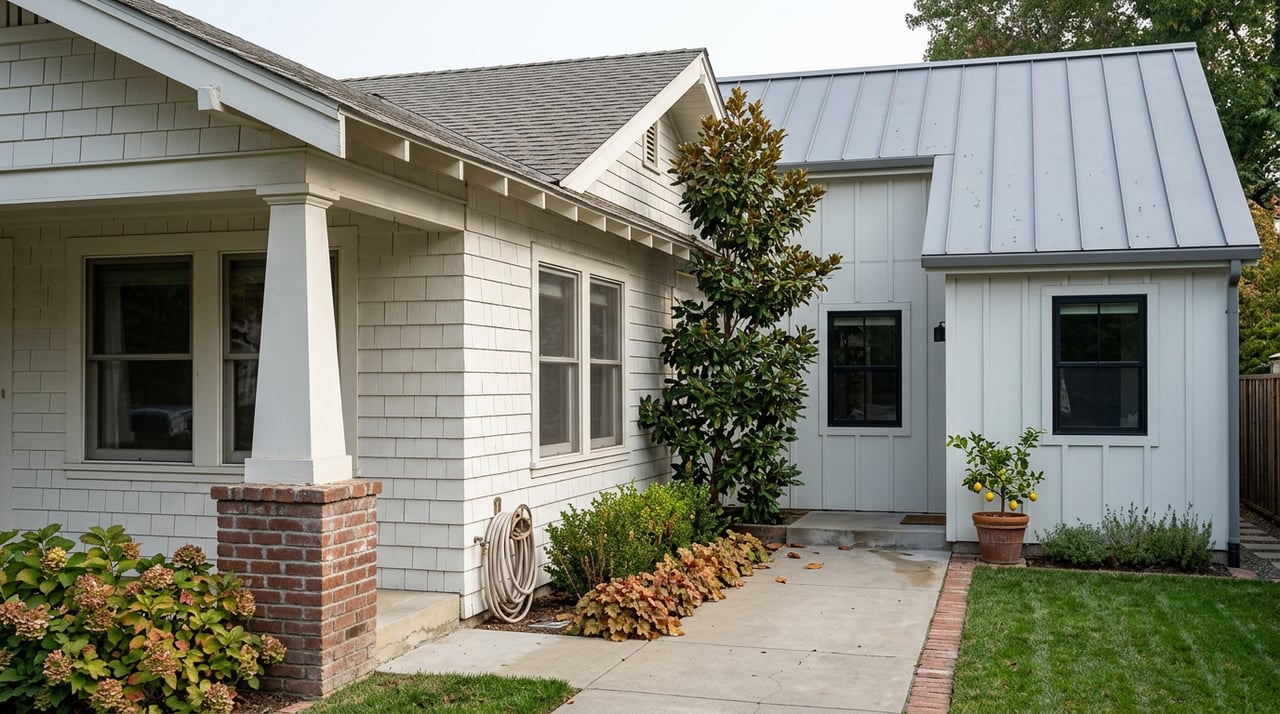
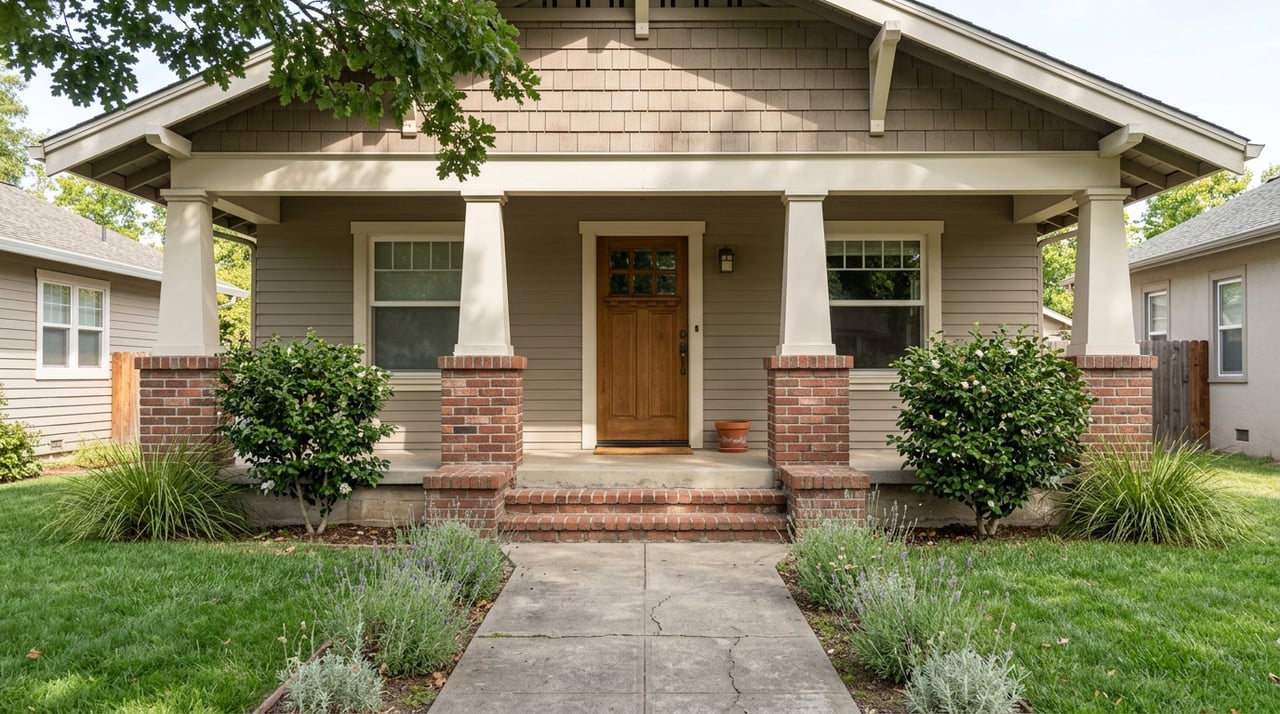
Craftsman bungalows are one of the clearest architectural matches for Willow Glen’s older residential streets. San José’s style guidance describes them as one- or two-story homes with large cross-gabled roofs, prominent entry porches, exposed rafters, wide eaves, wood or stucco siding, and divided-light windows.
In person, these homes often feel compact, detailed, and handmade. That look fits Willow Glen’s early-20th-century character, especially on tree-lined blocks where porches and rooflines stand out.
How to spot a Craftsman
Look for these common features:
- Low, broad rooflines
- Wide eaves with exposed rafters
- Prominent front porches
- Tapered or square porch supports
- Wood trim and divided-light windows
How Craftsman homes usually live
Many Craftsman homes are one to one-and-a-half stories. Their floor plans often have smaller, more separated rooms than later postwar homes, and the porch is an important part of the home’s identity rather than an afterthought.
For buyers, that can mean a lot of charm and strong street presence. For sellers, it often means architectural details are a major part of the home’s value story.
What to know about Craftsman updates
Craftsman homes can be strong candidates for additions and interior updates. At the same time, San José’s design guidance points to the porch, roofline, windows, and wood trim as character-defining features that should be respected.
If you are evaluating a remodel, the key question is usually whether new work keeps the original massing and trim language legible. In Willow Glen, that balance often matters as much as square footage.
Spanish Revival Homes in Willow Glen
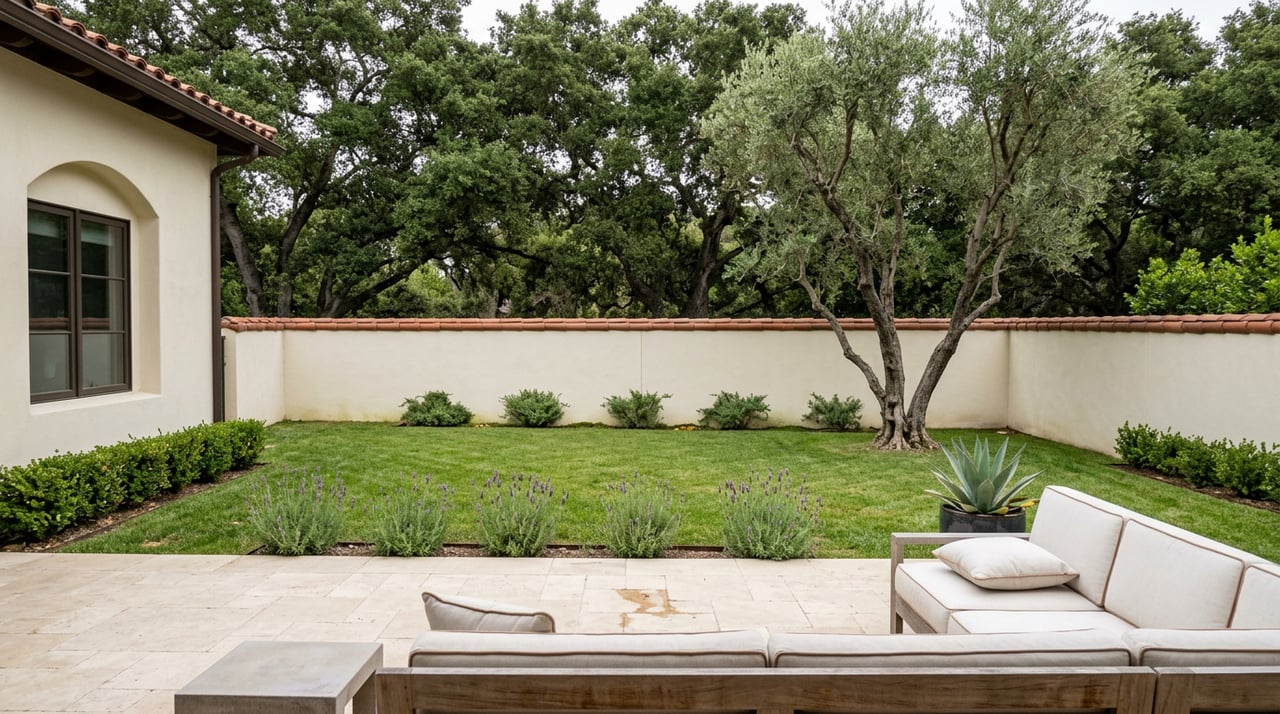
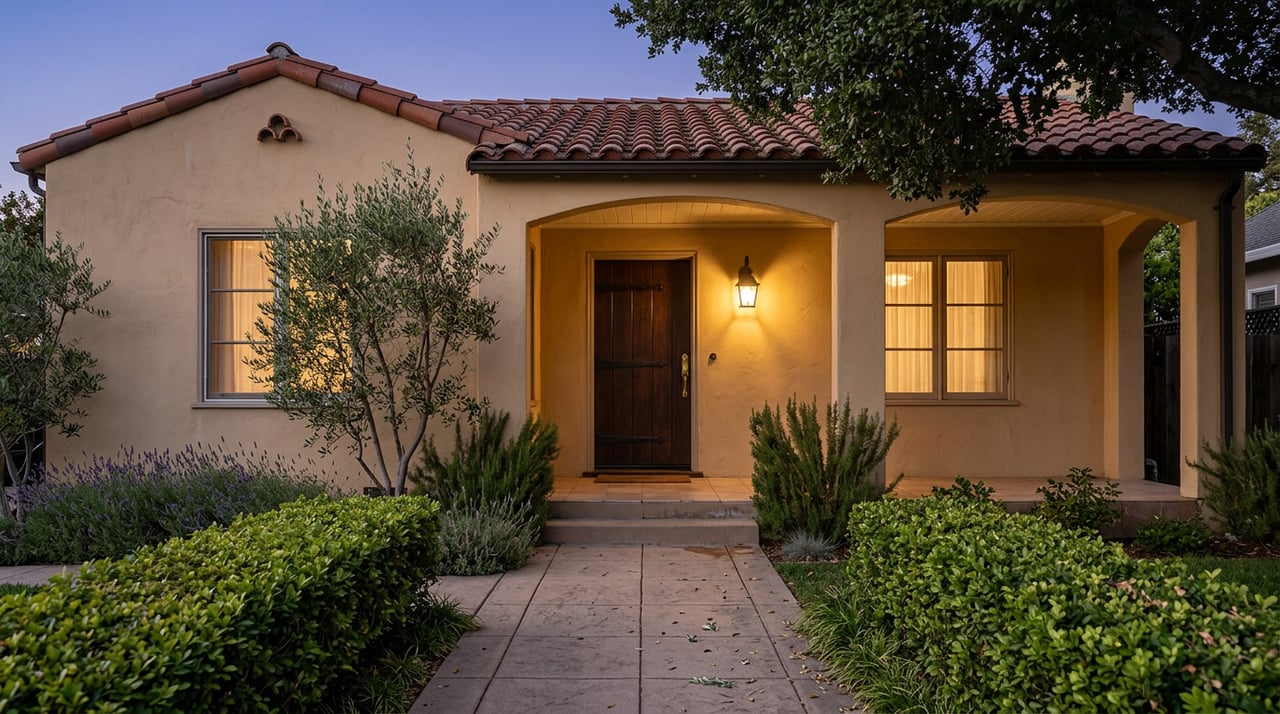
Spanish Revival and Spanish Colonial Revival homes add another memorable layer to Willow Glen’s streetscape. These homes are often easy to recognize because of their stucco exteriors, red tile roofs, asymmetrical forms, arched openings, and decorative iron or sculpted details.
One strong local example is the Dreischmeyer House on Willow Street, which city survey records describe as an excellent Spanish Colonial Revival residence. Those same records note that Willow Street is one of Willow Glen’s oldest corridors and includes many 1920s and 1930s Spanish Revival variations.
How to spot a Spanish Revival home
Look for these details:
- Stucco walls
- Red clay tile roofing
- Arched windows or entries
- Recessed front doors
- Decorative ironwork or carved trim
How Spanish Revival homes usually live
These homes are often one or two stories with irregular massing. Some include sheltered entries or courtyard-like outdoor spaces, which can make the front approach feel private and distinctive.
From the street, they tend to have strong visual presence. Stucco, arches, and tile roofing create a clear identity, especially when paired with mature landscaping.
What to know about Spanish Revival updates
Spanish Revival homes can offer great renovation potential, but their visual details are central to the style. Tile roofs, stucco texture, arches, and ironwork are not minor decorations. They are part of what makes the home read correctly.
City records for the Dreischmeyer House emphasize that additions should keep the original form and integrity easy to recognize. If you are buying or preparing to sell one of these homes, that context can help you evaluate what changes enhance value and what changes may fight the home’s character.
Ranch Homes and Eichlers
The postwar period created one of Willow Glen’s clearest design shifts. Ranch homes brought simpler one-story forms, low-pitched roofs, broad windows, and attached garages, while Eichlers pushed the mid-century look further with more glass, stronger horizontal lines, and indoor-outdoor planning.
Willow Glen has a notable Eichler presence. Visit San Jose reports that three Willow Glen tracts, especially Fairglen, contain more than 300 Eichler homes.
How to spot a ranch home
Ranch homes often include:
- One-story layouts
- Low-pitched roofs
- Wider-than-tall windows
- Simple porches
- Attached garages
These homes usually look quieter from the street than Craftsman or Spanish Revival houses. Their appeal often comes from proportion and ease rather than ornament.
How to spot an Eichler
Eichlers tend to stand out more clearly as modern architecture. San José’s style guide highlights traits such as very low-pitched roofs, low horizontal lines, an atrium, glass walls, and an attached garage.
If you are walking or driving through areas with Eichlers, the glass and flatness often make them easy to distinguish from a standard ranch. They can feel especially open and connected to the yard.
How mid-century homes usually live
Ranches generally offer some of the most open floor plans among Willow Glen’s older homes. Eichlers often go further with central atriums and indoor-outdoor circulation, which can make the layout feel unusually modern even today.
For many buyers, that means easier everyday flow. For sellers, it can mean the home appeals to people who want vintage character without the smaller room pattern common in earlier houses.
What to know about ranch and Eichler updates
Older ranch homes are often among the easiest historic-era homes to reconfigure internally, especially around kitchens and family spaces. Even so, the low profile and the relationship between house, garage, and patio remain important to the overall design.
With Eichlers in particular, keeping the original horizontal feel and indoor-outdoor connection matters. In Willow Glen, these homes are often valued for the exact features that make them different.
Newer Custom and Builder-Contemporary Homes
Not every Willow Glen home is historic or mid-century. Newer custom homes and builder-contemporary houses form another layer in the neighborhood, especially where older homes have been replaced or substantially redeveloped.
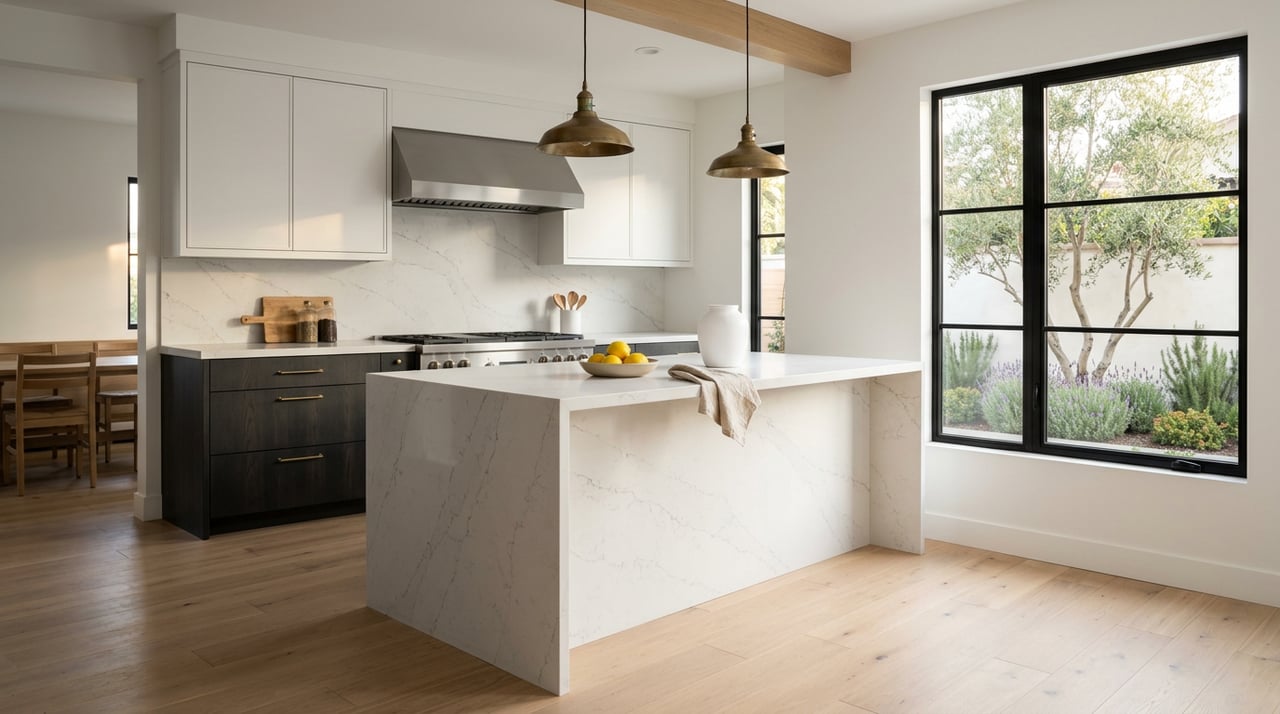
San José describes builder contemporary as a broad category that can include one- or two-story homes with low- to medium-pitched roofs, attached garages, sliding glass doors, and simple trim. In Willow Glen, these homes often offer the most open floor plans, larger kitchens, and bigger primary suites.
How to spot newer homes
Common signs include:
- Larger overall massing
- Cleaner rooflines
- Attached garages with more visual presence
- Sliding glass doors
- Simpler exterior trim with stucco, wood, stone, or board-and-batten accents
Why fit matters on older blocks
In Willow Glen, the design question is often not just whether a newer house looks attractive on its own. It is whether it fits the rhythm of the street.
City guidance points to massing, setbacks, and garage dominance as important factors. On a block with smaller historic homes, a newer build that respects those cues often feels more natural and more in tune with the neighborhood’s character.
Why One Street Can Look So Different
A common Willow Glen question is why a single street can show several architectural styles. The answer is simple: the neighborhood built out over a long period, and many areas were shaped by different development moments rather than one unified plan.
North Willow Glen alone reflects development from roughly 1885 to 1955. Palm Haven adds homes from the 1910s, 1930s, and 1940s, many designed by architects. That long arc is why Willow Glen can feel cohesive and varied at the same time.
What Buyers and Sellers Should Pay Attention To
If you are buying in Willow Glen, architecture is more than a style preference. It can affect layout, natural light, renovation flexibility, and how much original detail you may want to preserve.
If you are selling, your home’s architectural identity helps shape the marketing story. A Craftsman porch, a Spanish tile roof, an Eichler atrium, or a well-scaled newer build can all speak to different buyers, but only if the home’s defining features are presented clearly.
A useful starting point is to focus on the elements that carry the style most strongly:
- Porch design
- Eaves and roofline
- Window proportion
- Garage placement
- Exterior materials and original texture
- Overall massing
That kind of detail matters in Willow Glen because buyers often respond to homes that feel true to their era and comfortable on their block.
When you are ready to make sense of Willow Glen’s housing stock, our family takes a practical, property-by-property approach. Whether you are buying a character home, preparing a sale, or weighing how a home fits your goals, The Chiavettas can help you read the details and move with confidence.
FAQs
What architectural styles are common in Willow Glen?
- Willow Glen commonly features Craftsman bungalows, Spanish Revival homes, postwar ranch houses, Eichlers, and newer custom or builder-contemporary homes.
Why do Willow Glen streets have different home styles?
- Willow Glen developed over many decades, with North Willow Glen alone reflecting building periods from about 1885 to 1955, so several architectural eras appear side by side.
What should Willow Glen buyers notice in older homes?
- Buyers should pay close attention to the porch, roofline, eaves, trim, window proportions, garage placement, and overall massing because those features often define the home’s style and character.
Where can you find Eichler homes in Willow Glen?
- More than 300 Eichler homes are located in three Willow Glen tracts, especially Fairglen.
Are newer homes common in Willow Glen?
- Yes, Willow Glen also includes newer custom and builder-contemporary homes, often with more open floor plans, larger kitchens, attached garages, and larger overall square footage.